Why preventive inspection belongs in the tooling conversation
System 3R’s official preventive-maintenance overview treats calibration tools, reference systems and automation as separate service areas. It describes reconditioning worn reference-system components and planning maintenance to reduce unexpected stops. This is an ongoing service topic, not a newly announced product.
For a shop considering compatible tooling, the practical lesson is to separate three questions: what is installed, what has been observed, and what component is actually required? PLUS AUTO can review a compatible replacement enquiry, but a purchase should not stand in for diagnosing an uncertain clamping condition.
1. Build a record of the complete setup
Record the chuck, holder, pallet and spigot or drawbar references together. Add the machine, mounting orientation and the operation where a problem was noticed. Include photos of the assembly and accessible contact surfaces, taken only under the machine’s safe inspection procedure.
Describe the observation rather than assuming the cause: for example, a changed alignment reading after a holder change, or a difference between two fixtures. Keep the measuring method and reference tool in the record so a technician can assess what the result actually means.
2. Distinguish alignment checking from calibration
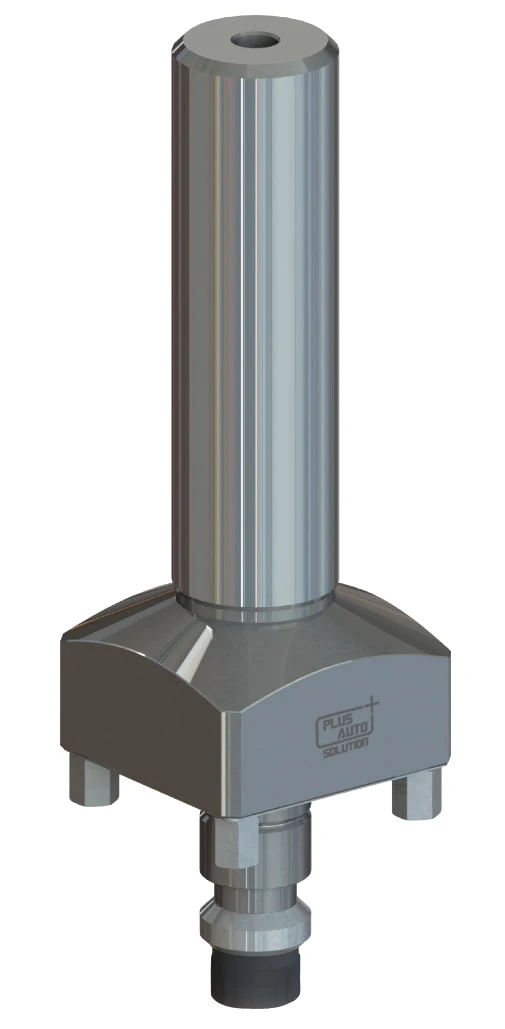
The PLUS AUTO PA-15007P Extended Checking Pin is listed for radial, axial and angular alignment checks on ITS-compatible chucks. Its stated concentric tolerance is not a calibration certificate for the entire chuck, machine or measuring process.
Confirm that the checking tool matches the installed interface and the approved measuring procedure. For acceptance limits, calibration intervals and any corrective work, use the equipment documentation and qualified technical support—not a generic online checklist.
3. Review storage protection and pneumatic requirements separately
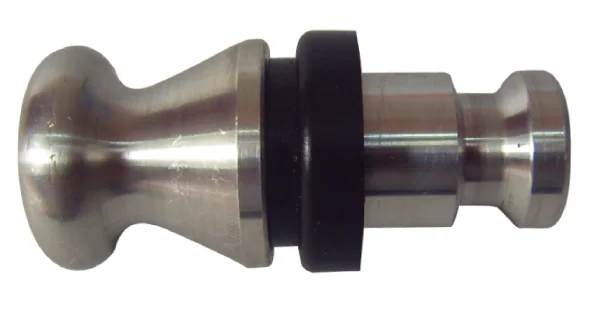
The PA-18011S aluminum maintenance plug is an accessory intended to help protect an unused chuck from swarf and debris during maintenance or storage. Confirm its fit before ordering. It is not a substitute for cleaning, inspection or verifying that a chuck has clamped correctly.
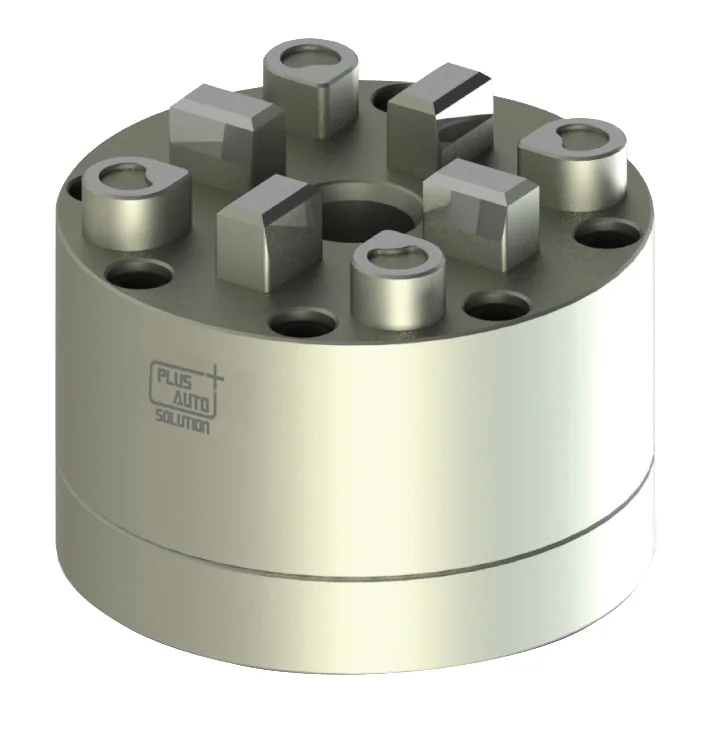
For a pneumatic installation, document the actual model, air connections and cleaning arrangement. The PA-21037V-TR Macro-compatible pneumatic chuck has its own published air-supply and reference-surface-cleaning specifications. Those values must not be copied to a different chuck simply because it looks similar.
4. Make a replacement enquiry specific
If a replacement or additional component is required, send PLUS AUTO the original reference, proposed model, drawing or installation photos, intended use and quantity. State whether the existing holder or pallet will remain in service. Our compatibility checklist provides a starting point.
Keep EROWA-compatible ITS and System 3R-compatible Macro enquiries distinct. The examples below serve different tasks and interfaces; they are not a matched kit or a promise of interchangeability. Request a product-specific review before placing an order.