In its May 2026 overview of automated workpiece clamping, EROWA describes the VPC (Vise Power Clamp) system and stresses that clamping, handling and machining must work together for process reliability. The update discusses VPC-specific clamping pins, chucks, cleaning and status-monitoring features. Those details describe EROWA’s system; they are not specifications for PLUS AUTO products.
The broader lesson applies whenever a shop reviews an automated workholding change: the robot, gripper and chuck are only parts of an assembly. A compatible component should be assessed against the real machine interface and handling arrangement, not selected from a family name or a photograph alone.
Five checks before introducing a compatible component
1. Identify the exact interface and reference
Record the installed chuck, holder, pallet and spigot or drawbar references, including the system family and size. Similar-looking products can have different locating, clamping or flushing details. Start with the machine-side and workpiece-side interfaces that will actually mate.
2. Check the handling connection and clearances
Confirm the gripper contact surfaces, approach direction, tool and fixture envelope, and clearance through the robot’s expected path. If an adapter, base plate or extended holder is involved, include its full assembled height and orientation in the review.
3. Document the clamping and cleaning sequence
Write down how a component is loaded, clamped, released and cleaned, and which signals or operator checks confirm each step. Do not assume that a cleaning duct, monitoring feature, air connection or clamping sequence transfers from one chuck model to another.
4. Verify the machine mounting and operating conditions
Provide the mounting drawing or a clear view of the mounting face, the machine model, vertical or horizontal orientation, and the pneumatic or mechanical conditions. Automation readiness depends on the complete installed arrangement, not just the nominal interface.
5. Agree how the installation will be checked
Before production, define the required checks with the machine builder or qualified integrator: seating, clamping status, position, clearances and the acceptance method for the actual process. Keep the measurement method and result with the setup record. A product’s catalogue repeatability figure is not proof that a full robot cell has been validated.
Where PLUS AUTO fits—and where review is still needed
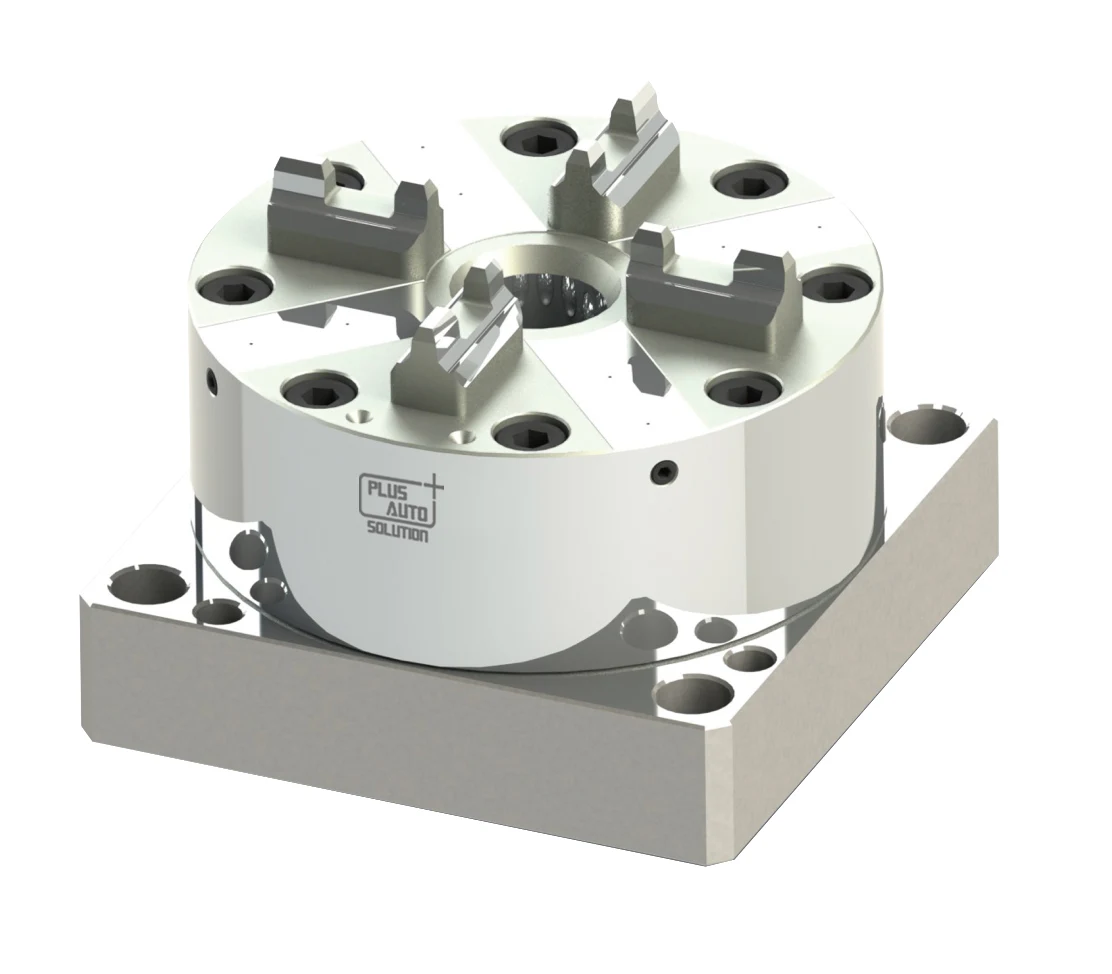
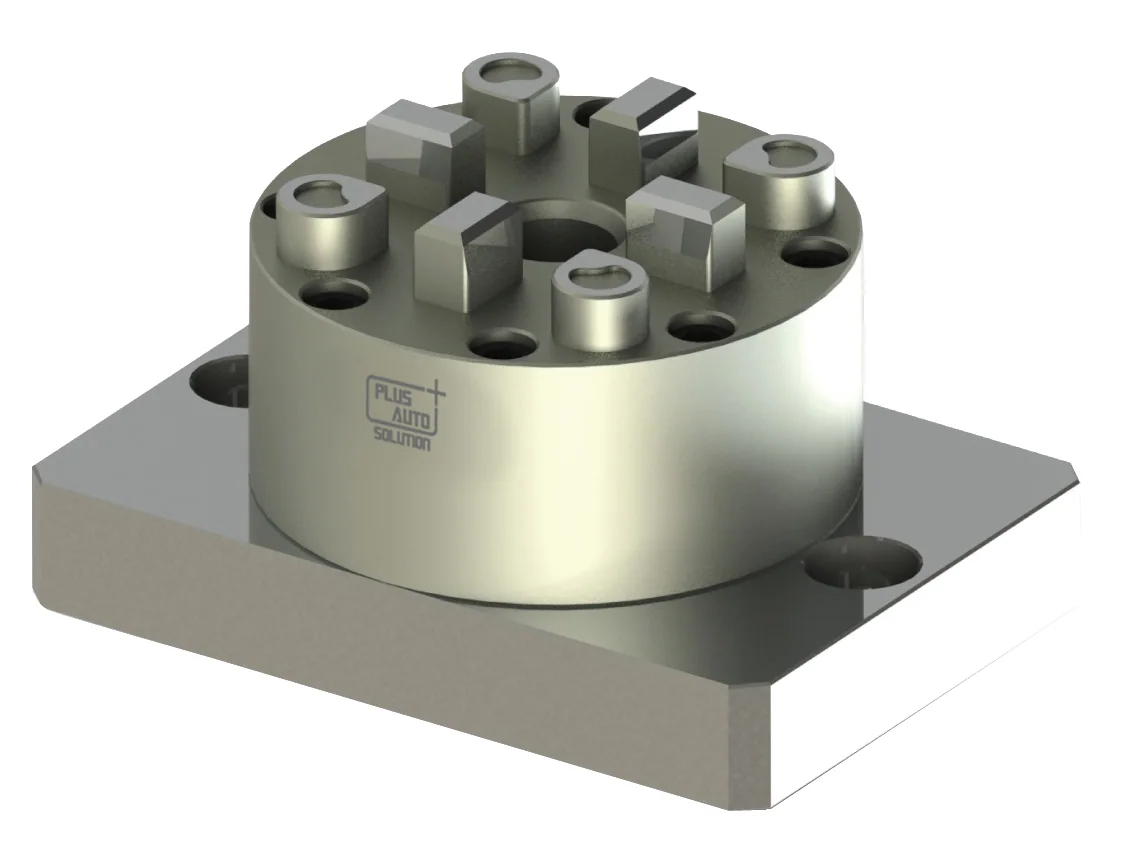
PLUS AUTO publishes individual components for EROWA-compatible ITS and System 3R-compatible Macro-style setups. For example, the PA-70003G D100 pneumatic ITS chuck and PA-21038V-TR Macro-style pneumatic chuck belong to different interface families. They are shown here as catalog examples, not as a matched set or as components validated for EROWA VPC.
Send the original manufacturer reference, the PLUS AUTO model under consideration, mounting information and photos or drawings of the gripper and installed setup. PLUS AUTO can review the product-level compatibility information for its published range. Robot programming, cell safety, machine integration and system-level validation remain with the responsible machine builder or automation integrator.
To start that review, use the workholding compatibility checklist or request a product-specific compatibility check. For background on the referenced announcement, consult EROWA’s official article on reliable automation of workpiece clamps.